You are browsing the Blog for Penn State Turfgrass.

Jack Falvey – Bel-Air Country Club
Yesterday was the start of my west coast swing with my visit with Tyler Jackson at the California Golf Club of San Francisco. After a quick flight to LA last night, I turned my sights on my trip to Bel-Air Country Club to visit with John “Jack” Falvey. Jack spent his time prior to Penn
...read more

Tyler Jackson – California GC of San Franscisco
Today marked the first of 20 trips to visit interns around the United States and in Europe. You can see the locations of all students on my former blog post about the 2015 PSU Turfgrass Internships. For those of you who think these are glamorous, think again. Actually, I love the travel and seeing all
...read more
Entomology Update from the Turfgrass Entomology Lab at PSU
We have had a rapid change in the development of our ABW populations in PA since my last blog entry (though it appears we are in a slight cool down at the moment). Early instar larvae were abundant in samples from across the state mid-week last week (May 13th). Our plant indicators that signal optimal larvicide timing (Rhododendron catawbiense – which I have been misspelling for a long time) have gone into full bloom in a relatively short time frame. If you are intending on putting down a larvicide, now would be a good time, as the population of larvae residing in the plant are beginning to appear in the soil.
Congratulations to the Turfgrass Management Masters of Professional Studies Graduates!
Congratulations to the graduates of the Turfgrass Management Masters of Professional Studies class of 2015!

Congratulations to PTC Scholarship Winners!
Congratulations to Turfgrass Science students Bill Ellinger and Chris Marra, recipients of the 2015 Pennsylvania Turfgrass Council scholarships!
Congratulations to Spring 2015 Graduates!
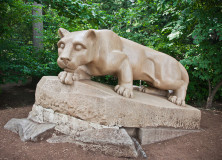
Congratulations to these 4-year program and associate program students who graduated this past Spring semester!
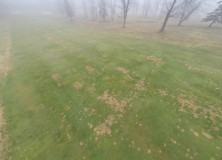
2015 Snow Mold Trial (VIDEO)
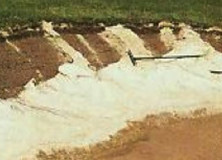
In the interest of trying to expand our delivery methods when it comes to our trial work and outreach, I have decided to attempt to put together a series of videos for all of the trials that we conduct in any given year. It’s actually a big undertaking that adds a lot of work to
...read more
Register Now for the 2015 Annual Sport Administration Golf Outing!
Register Now for the 2015 Annual Sport Administration Golf Outing!

Why do some lawns have more snow mold than others?
The winter of 2015 is finally over, and in its wake are brown lawns, many with bleached patches of matted, crusty grass. The patches are symptoms of a disease called snow mold, caused by one or more cold-tolerant fungi that attack plants under snow cover. The two most common snow mold diseases occurring in Pennsylvania are gray snow mold and pink snow mold, caused by Typhula incarnata and Microdochium nivale respectively.


